Depth of buildup
Months of residue around fryer stations or wall seams will change the work compared with lightly soiled surfaces.
One-time cleaning for built-up grease, neglected edges and areas routine visits miss.
A one-time restaurant deep clean can tackle grease in floor edges, wall seams and reachable areas around the cooking line. Request kitchen deep cleaning on its own or add dining floors and seating if those areas need a thorough clean too.
Request a cleaning estimate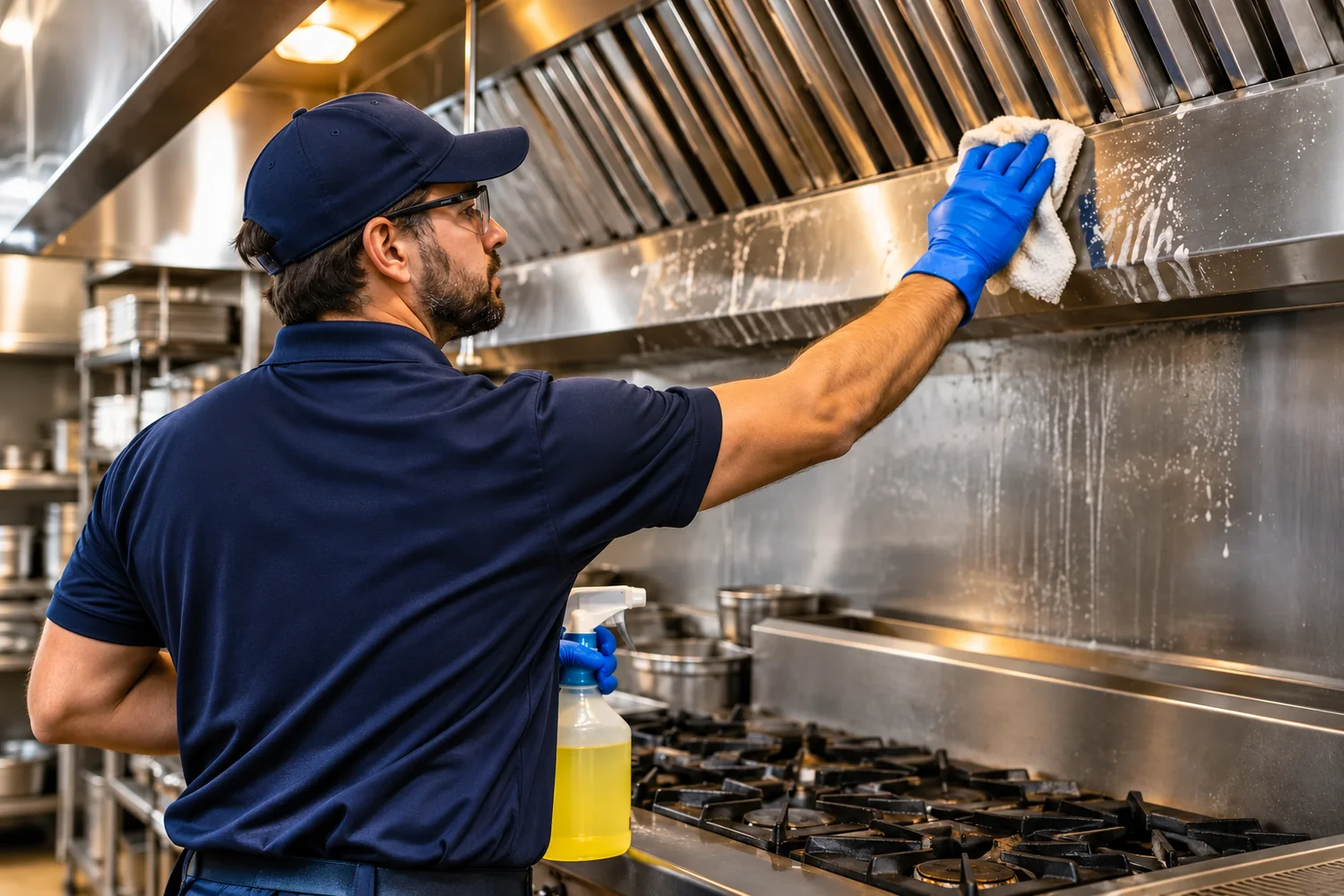
Start with the areas causing problems: behind movable equipment, around cooking stations, under accessible shelves or along floor edges. Fixed appliances and exhaust systems may require additional arrangements.
When was the last thorough clean, and which areas are hard for your closing crew to reach?
If the closing team is doing its usual work but old grease remains around the fry line, beneath accessible shelving or along floor edges, the problem may call for a dedicated deep-cleaning visit. Start with a short list of places routine cleaning has not resolved.
A walkthrough should also identify fixed appliances, heavy equipment and places that can only be reached by moving restaurant property. Do not assume that all those areas are automatically part of a deep clean.
Dust above the prep line can collect on exposed ledges or shelf tops that the closing shift misses. If those surfaces need attention, include them in your deep-clean request. Share the height of the ledges and what sits below them. High dusting can be included in the estimate if the surfaces can be reached safely and nearby food, equipment and prep areas can be protected.
A deep clean deals with grease and soil left behind by routine closing work. The areas may include cooking lines, spaces under accessible equipment and storage edges. When specifying guest areas, see whether a deep clean can include dining rooms and restrooms.
Set aside enough downtime for areas normally blocked by daily operations. Prioritize where old grease remains after closing shifts, then confirm which shelves, movable equipment or fixtures can be cleared before the visit.
Months of residue around fryer stations or wall seams will change the work compared with lightly soiled surfaces.
Cleaning behind equipment on casters differs from work behind fixed gas or electrical appliances.
A targeted fryer-line clean is not the same job as detailing floors, storage areas and dining surfaces.
Cooling time, removal of stock and a fixed opening deadline affect scheduling and labor. If you’re taking over the space, review what to clean before reopening.
Nightly work usually follows a repeatable closing checklist. A deep clean targets accumulated grime and areas the routine does not reach.
Do not assume so. Gas, electrical and other fixed connections require appropriate personnel. Describe the equipment before requesting the visit.
Photograph the most persistent grease or residue, then list which spots have resisted regular cleaning. That makes a focused quote possible.
Tell us where the buildup is, how high the surface sits and what equipment or work areas are underneath. The estimate can confirm which ledges are safely reachable and what needs to be cleared. Work that needs specialized access should be discussed separately.
Active cooking generally conflicts with cleaning around hot equipment and food. Discuss a shutdown period or a scheduled non-service window.
Compare the buildup with routine kitchen cleaning. List equipment exteriors and walk-in shelving separately if access or inventory changes the scope. Use inspection-preparation cleaning to discuss the surfaces listed on a notice.
The Elmhurst cleaning guide outlines how to separate work in coolers, kitchen floors, and entrances.
Use the exhaust cleaning guide if your request includes grease inside ductwork or fans.
Send the areas with the heaviest buildup and the longest window the restaurant can set aside for the work.
CALL NOW(929) 488-1060