Cooking-line access
The number of stations and whether burners, fryers and prep tables are accessible after closing.
Degrease kitchen floors and clean accessible prep surfaces and appliance exteriors.
Commercial kitchen cleaning can cover prep tables, backsplashes, dish areas and accessible cooking-line exteriors. Add floor degreasing around the cookline where normal closing work leaves buildup. The kitchen layout and equipment shutdown determine which surfaces can be reached.
Request a cleaning estimate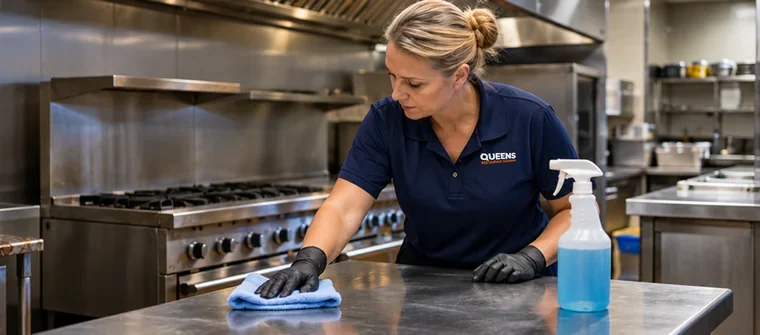
For a useful estimate, identify the cookline sections that need attention, which equipment can be moved safely and which prep surfaces your staff will clear. Use the kitchen and floor checklist to list these areas and the access staff need to arrange.
Which cooking stations are in use until close, and what can staff clear before the cleaner arrives?
Most kitchen inquiries begin with a visible problem: greasy backsplashes, sticky edges or stainless surfaces that no longer come clean during a normal closing shift. Note exactly where the buildup sits. Mark the surfaces a cleaner can reach and the equipment an authorized person would have to move.
Does your kitchen have room for cleaning alongside the line? If not, plan for a shutdown window. List food-contact surfaces separately from appliance exteriors so we can discuss the right method for each.
Regular kitchen cleaning can cover prep surfaces, exposed equipment fronts, backsplashes and floor edges. For older grease along wall seams or around equipment, commercial kitchen deep cleaning may be a better fit. Identify grease-heavy areas and whether appliances are fixed or movable before choosing the work. If the buildup is confined to traffic lanes and floor edges, review kitchen floor degreasing as a separate visit.
After the last cooking station shuts down, identify which prep surfaces can be cleared and which equipment must cool before it is safe to clean. For an ongoing arrangement, separate every-night work from the harder-to-reach areas reserved for periodic visits.
The number of stations and whether burners, fryers and prep tables are accessible after closing.
Light surface soil takes different work than old buildup along walls, table legs and backsplash seams.
Who clears food, utensils and food-contact surfaces—and whether a different cleaning method is required.
Time between final service and the next prep shift sets realistic limits for the visit. Send us the restaurant ZIP and earliest entry time through the service area inquiry section.
Hot equipment should be shut down and allowed to cool as directed by the manufacturer before anyone cleans nearby. Confirm which stations will be ready when the cleaners arrive.
Restaurant staff should agree in advance which food, utensils and loose items they will remove. The cleaning estimate should not assume workers will handle food stock.
Interior appliance cleaning is different from wiping reachable exterior surfaces. Tell us which appliances need attention, and specify whether you mean the interior or exterior.
Often those tasks can be requested together, but they require different equipment and access. Describe both areas so neither is omitted from the estimate.
If cooler shelves need attention, schedule walk-in cooler cleaning around inventory removal. Use inspection-preparation cleaning to scope surfaces named on an inspection notice.
See the Flushing kitchen and floor guide for scheduling around back-door access and prep.
If you need grease removed from inside the hood, ducts or fan, request commercial exhaust-system cleaning separately.
Specify prep areas, dish stations, grease buildup and which equipment will be cool and clear before the visit. See the locations listed for Queens when checking availability for your address.
CALL NOW(929) 488-1060